

Learn to spot the four most common home-invading cockroaches: German (small, tan with two stripes; kitchens/bathrooms), Brown-banded (pale bands; higher, drier spots), American (large, reddish-brown; basements/sewers), and Oriental (shiny dark; cool, damp areas). Watch for pepper-like droppings, shed skins, oothecae, and a musty odor. Roaches can carry over 33 bacteria, trigger asthma, and contaminate food. Clean, dry, sealed homes plus gel baits and boric acid help control them. You’ll see how to identify and tackle each.
Key Takeaways
- German cockroach: small tan roach with two dark stripes; thrives in warm kitchens/bathrooms; rapid breeders; pepper-like feces indicate activity.
- Brown-banded cockroach: half-inch, with two pale bands; favors warm, dry, high areas; oothecae glued to furniture; may forage by day.
- American cockroach: large reddish-brown with yellow band; prefers warm, moist, dark places (basements, sewers); can glide; contaminates surfaces.
- Oriental cockroach: shiny dark, about 1 inch; poor climber; found in cool, damp, ground-level areas; egg cases hidden in humid spots.
- Health and signs: droppings, shed skins, musty odor, and nocturnal sightings signal infestations; roaches can trigger asthma and spread bacteria.
German Cockroach

Though small, the German cockroach is the most common indoor roach you’ll encounter, quickly exploiting kitchens and bathrooms. You’ll spot adults at about 13–16 mm long, tan to brown, with two dark parallel stripes on the pronotum extending to the wing bases. They have wings but rarely fly; they dart or glide when disturbed. Nymphs are smaller, darker, wingless, and similarly striped. Females often appear darker and may carry oothecae until hatching.
You’ll find them in warm, humid areas near food and water—dishwashers, sinks, stoves, and cabinets. They hide in tight cracks by day, forage at night, and hitchhike in bags, boxes, and used appliances. They eat starches, sweets, grease, and scraps. Feces look like dark pepper. Rapid reproduction and short lifecycles drive explosive infestations. One female can produce multiple egg capsules throughout her life.
Brown-Banded Cockroach
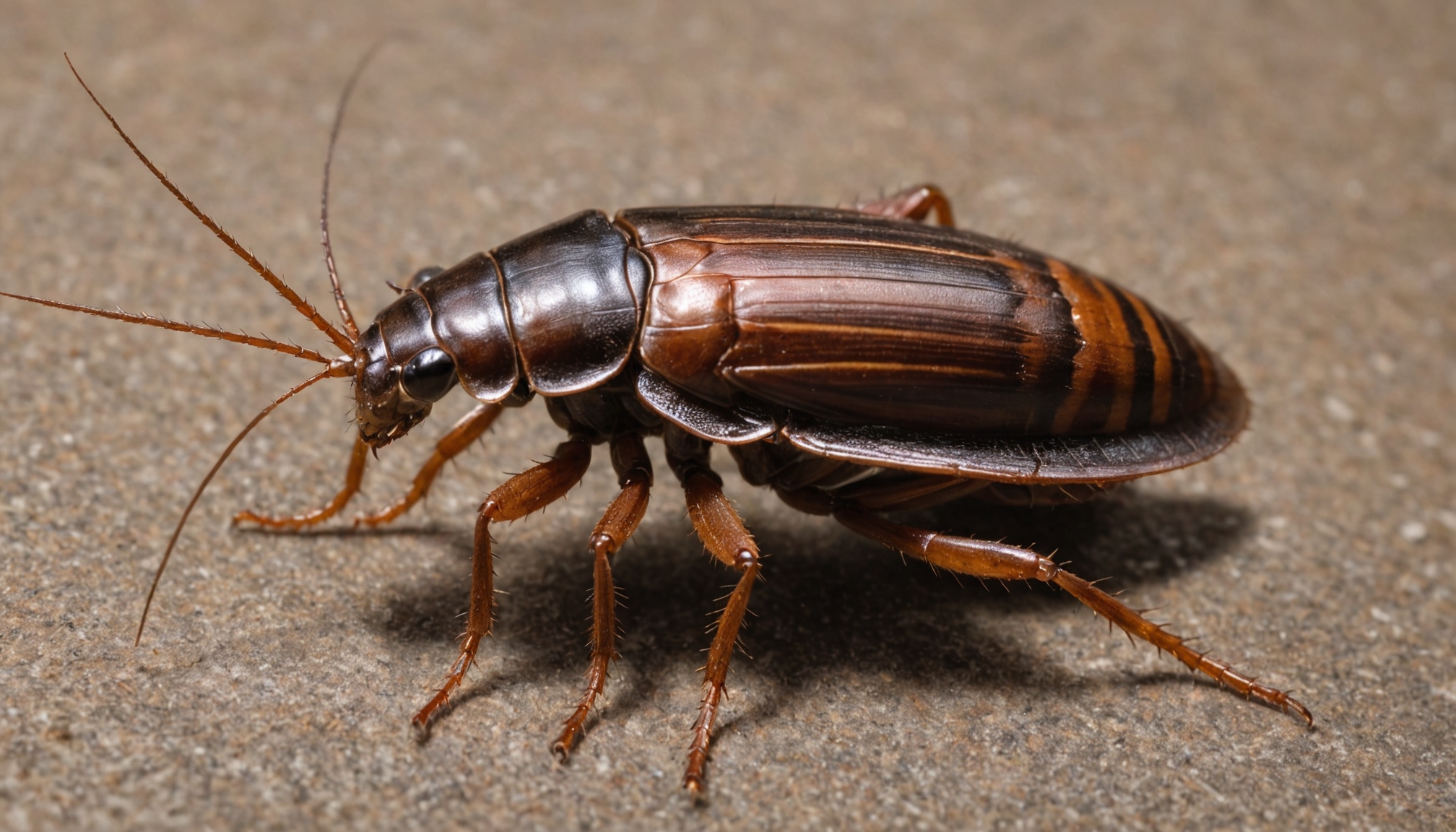
Unlike the moisture-loving German roach you’re likely to find near sinks, the brown-banded cockroach prefers warm, dry, elevated spots in your home. You’ll see them near ceilings, high cabinets, closets, pantries, and inside furniture—often tucked into electronics or under picture frames. At about 1/2 inch long, they show two pale bands across tan to dark wings and abdomen. Males are slimmer with full wings and can fly; females are stouter, darker, and can’t fly. They are primarily nocturnal, though they may search for food during the day.
You’ll notice nocturnal activity, shy daytime behavior, and little interest in water. They glue oothecae to shelves or furniture; each holds 10–18 eggs, and development speeds in warmer rooms. Nymphs lack wings and darken as they molt. They feed on starchy materials—book bindings, wallpaper glue, adhesives—contaminating surfaces and triggering allergies. Target upper areas and electronics for control.
American Cockroach
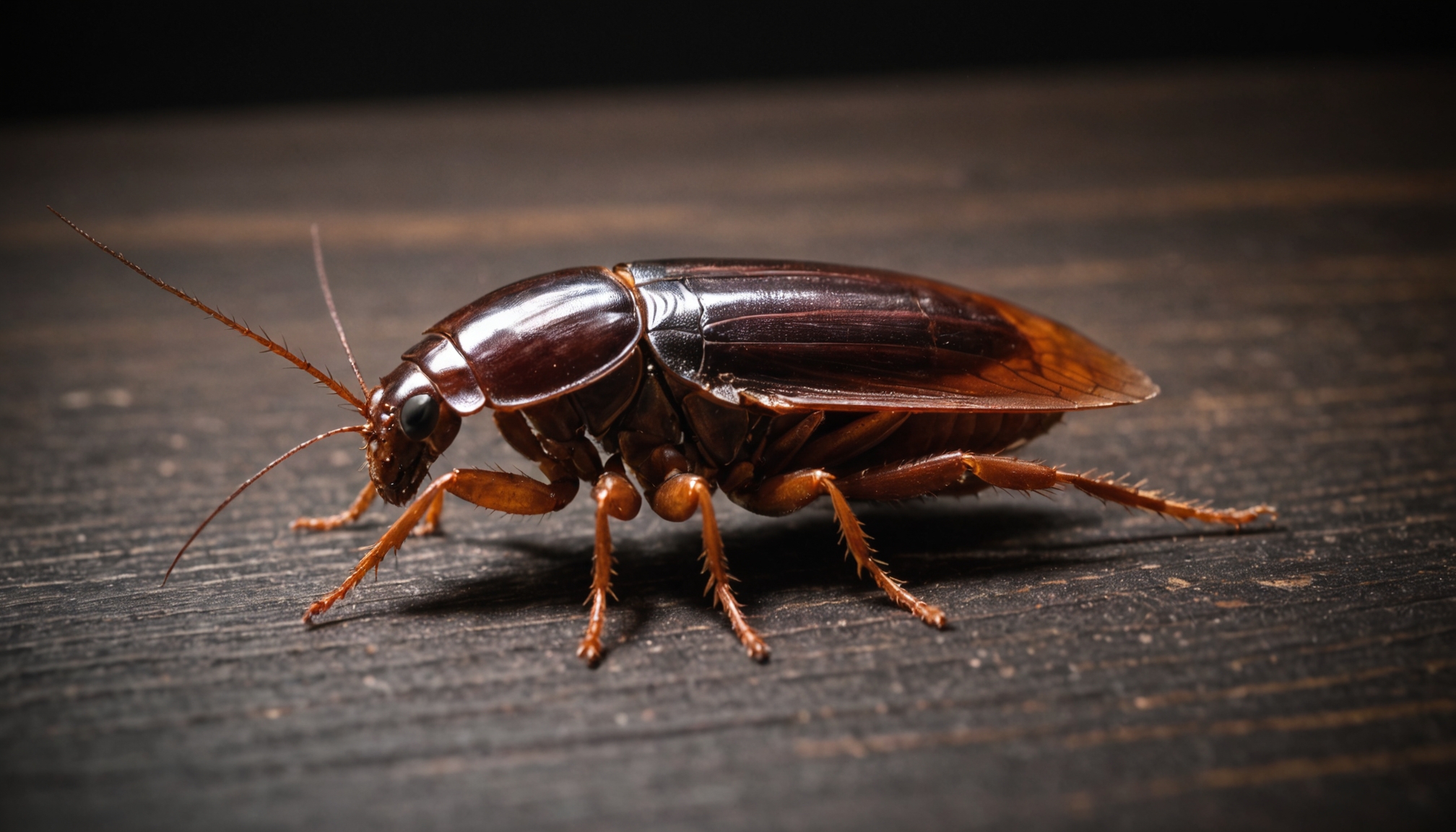
You can spot the American cockroach by its large 1.5–2.1 inch reddish-brown body with a faded yellow band behind the head and long, sensitive antennae. You’ll often find it in warm, moist, dark places like basements, crawl spaces, sewers, and around drains, where it stays mostly nocturnal and fast-moving. If you see adults with fully developed wings, don’t be surprised—they can glide short distances to escape or reach new areas. They can contaminate food and surfaces and carry disease-causing organisms. Understanding baby cockroach species identification is crucial for effective pest management, as the nymphs can often be mistaken for other small insects. Nymphs are typically smaller and lack wings, but they share the same reddish-brown coloration as adults, making identification challenging. Early detection of these young pests can help prevent larger infestations in your home.
Appearance and Size
The American cockroach is a large, reddish-brown roach with a long, flat, oval body built for speed and squeezing into tight spaces. You’ll usually see adults measuring 1.4 to 2.1 inches (35–54 mm), making them one of the largest roaches in U.S. homes. Males and females are similar in size; male wings often extend slightly past the abdomen, while female wings match body length. Adults can exceed 5 cm in length, confirming they are among the largest cockroaches found in U.S. homes. In contrast to the American cockroach, the German cockroach characteristics include a smaller size, typically measuring about 0.6 to 0.7 inches (15-18 mm) in length, and a lighter brown color with two distinct dark stripes on their back. They are more commonly found in kitchens and bathrooms, as they thrive in warm, humid environments and are attracted to food sources. Understanding these differences can help in identifying and managing cockroach infestations effectively.
Look for the glossy, oily sheen and the pronotum’s yellow to pale brown band, often forming a figure-8 pattern. Antennae are extremely long—often longer than the body—and the legs are long and spiny. At the tip of the abdomen, you’ll notice paired cerci; males also have small styli. Nymphs appear grayish-brown, wingless, with some yellow abdominal markings.
Habitat and Behavior
Although American cockroaches roam widely, they thrive where warmth and moisture meet. Outside, you’ll find them under mulch, leaf litter, rocks, woodpiles, and in hollow trees, as well as sewers, dumps, greenhouses, and garden debris. Around homes, they linger near foundations, porches, basements, and crawl spaces, preferring 70–84°F and avoiding prolonged cold.
Indoors, they slip through gaps under doors, window frames, floor cracks, and drains, settling in warm, dark, humid spots—kitchens, bathrooms, laundry rooms, basements, boiler rooms, and steam tunnels. You’ll see them in commercial food areas too. They’re nocturnal omnivores, feeding on decaying matter outdoors and crumbs, pet food, fermenting or starchy items, and residues indoors. They survive months without food but need water. Females stash egg cases in concealed warm sites. Limited flight and seasonal migrations help them persist. They can contaminate food and surfaces and produce allergens, posing public health risks in infested buildings.
Oriental Cockroach
You can spot Oriental cockroaches by their shiny black to dark reddish-brown bodies, long antennae, and size—about 1 inch for males with partial wings and larger, broader females with tiny wing pads. They’re poor climbers, so you’ll usually see them at or below ground level. Expect them in cool, damp spots like basements, crawl spaces, and near plumbing, especially when hot or dry weather pushes them indoors.
Identification and Size
While often called a “water bug” or “black beetle,” the Oriental cockroach is easy to identify by its glossy, dark black to reddish-brown body and distinct oval shape. You’ll notice a smooth, shiny exoskeleton and long antennae. Males look slimmer with short wings that cover about three-quarters of the abdomen; females appear broader and heavier with only tiny wing pads. Neither sex flies.
Adults are larger than German cockroaches but smaller than American ones. Males typically measure 18–29 mm (about 0.7–1.14 inches); females usually reach 20–32 mm (about 0.8–1.26 inches). Nymphs resemble adults but are wingless and less glossy.
| Feature | What you’ll see |
|---|---|
| Color | Shiny black to dark reddish-brown |
| Shape | Distinct oval, smooth surface |
| Wings | Male short-winged; female wingless pads |
Habitat and Behavior
Shadow-loving scavengers, Oriental cockroaches stick to cool, damp hideouts near ground level—think basements, crawl spaces, sewers, and areas around pipes, drains, and radiators. Outside, you’ll find them beneath mulch, leaf litter, stones, and debris. They avoid bright, dry areas and thrive where leaks, condensation, and clutter provide moisture and shelter.
You’ll see activity at night. They move slowly, aggregate near water sources, and usually stay on lower floors, seldom reaching upper levels or high cupboards. They enter through foundation cracks, door thresholds, gaps under siding, and along utility lines, pipes, drains, and garbage chutes; drought or extreme weather drives them indoors.
They’re omnivorous scavengers, feeding on decaying matter and crumbs. Females have vestigial wings; males rarely fly. Their secretions glue egg cases in hidden, humid spots.
Health Risks and Signs of Infestation
Although roaches rarely bite, their presence poses real health risks and clear warning signs. You’re exposed to cockroach antigens from droppings, shed skins, saliva, and body parts that can trigger asthma attacks and allergic flares—especially in children, the elderly, and anyone with respiratory disease. Roaches mechanically carry more than 33 bacteria and multiple parasites, including E. coli and salmonella, from sewage and debris to your food and surfaces. Defecation and regurgitation on food increase risks of severe gastrointestinal illness. Scratches can also infect because roaches harbor pathogens, and their debris worsens indoor air quality.
Watch for nocturnal sightings in kitchens and bathrooms, pepper-like fecal spots along walls, shed exoskeletons and oothecae in cracks, a strong musty-oily odor, and gnawed food packaging, paper, or leather—signs of active reproduction and contamination.
Control and Prevention Strategies
Knowing the health risks roaches bring, you can cut them off with a clean, dry, and sealed home backed by targeted controls. Clean kitchens daily: mop, wipe counters, and clear crumbs under appliances. Bag trash tightly and remove it often. Store human and pet foods in airtight containers, and rinse recyclables. Fix leaks, run dehumidifiers in damp rooms, and dry sinks and pet bowls overnight. Reduce clutter—discard cardboard, organize storage off floors, and vacuum cabinets and behind appliances. Seal cracks, repair sweeps and screens, and caulk gaps around pipes and vents.
| Action | Why it works |
|---|---|
| Sanitize/contain food | Removes bait |
| Control moisture | Cuts essential water |
| Seal/declutter | Removes harborage |
Use gel baits, discreet bait stations, and light boric acid dusting; skip foggers. Consider professional help for heavy infestations.
Frequently Asked Questions
Do Cockroaches Fly, and Which Species Are Capable Flyers?
Yes—some cockroaches fly, but not all. You’ll see real fliers in warm, humid conditions. American cockroaches glide short distances. Smokybrown cockroaches fly strongly and chase lights. Brown-banded males fly when disturbed; females don’t. Wood cockroach males are adept fliers, especially in May–June; females can’t fly. Asian cockroaches resemble German roaches but fly readily to lights. German cockroaches have wings yet won’t fly, staying ground-bound indoors.
How Do Cockroaches Get Into High-Rise Apartments?
They get in through plumbing, cracks, and shared spaces. You’ll see them use sinks, drains, and toilets, slipping through broken seals and humid pipe chases. They squeeze under doors without sweeps and through gaps around windows, conduits, and baseboards. They ride in on grocery bags, backpacks, and laundry, spreading via hallways, trash rooms, and elevators. In high-rises, they travel vertically through shared pipes and shafts. Seal gaps, fix leaks, and coordinate building-wide control.
Can Pets Attract or Deter Cockroaches?
Yes—your pets don’t attract roaches, but their food and habits do. You draw cockroaches when you leave kibble out, especially overnight, store bags unsealed, or let crumbs and spills linger. Roaches smell that protein-rich chow and feast, contaminating bowls and spreading germs like Salmonella. You deter them by feeding set portions, removing leftovers, sealing food in airtight metal containers, cleaning bowls daily, tidying feeding areas, disposing of feces promptly, and using pet-safe pest controls.
What Time of Year Are Cockroaches Most Active Indoors?
They’re most active indoors during warm, humid months—typically late spring through summer—when temperatures hover around 70–90°F and moisture’s abundant. You’ll notice spikes after rainstorms and during heatwaves that drive them inside. In fall, cold snaps push more roaches indoors seeking warmth and water, especially around kitchens, bathrooms, basements, and appliances. Winter slows them, but heated, humid homes let populations persist and breed. In hot, humid regions, you’ll see near year-round activity with summer peaks.
Are Natural Predators Effective for Indoor Cockroach Control?
No. Natural predators rarely control indoor cockroaches effectively. You’re dealing with dense, hidden infestations and conditions predators don’t thrive in. Spiders, geckos, or wasps won’t reproduce or hunt enough indoors to cut numbers quickly. Use IPM instead: tighten sanitation, dry leaks, seal cracks, place gel baits or boric acid in crevices, and vacuum harborage areas. Reserve sprays for targeted, low-toxicity applications. Outdoors, predators help; indoors, they’re supplemental at best.
Conclusion
You’ve got the know-how to spot and stop the most common home-invading roaches. By recognizing German, brown-banded, American, and Oriental cockroaches—and the signs they leave—you can act fast to protect your health and home. Seal entry points, reduce moisture, store food tightly, and clean regularly. Use baits and traps early, and don’t hesitate to call a professional if activity persists. Stay vigilant, follow prevention habits, and you’ll keep roaches out and your living space safer.


