

Spot pepper-like droppings in cabinets and under appliances. Look for oval egg casings near sinks and laundry areas. Check for shed skins in warm, sheltered spots. Notice a musty, oily odor in kitchens or bathrooms. Hear nighttime scurrying in walls or pantries. Find chewed paper, wallpaper, or fabrics. Watch for allergy or asthma flares. Track moisture hotspots and fix leaks. Expect activity spikes in warm, humid weather. See roaches by day? It’s urgent—and the next steps can make control easier.
Key Takeaways
- Pepper-like droppings and smear marks in cabinets, under appliances, or along baseboards indicate active roach pathways.
- Brown, ridged oval egg casings near sinks, bathrooms, or laundry areas signal breeding sites and recent activity.
- Musty, oily odor in warm, enclosed rooms suggests a growing infestation driven by aggregation pheromones.
- Nighttime scurrying or rustling in kitchens and pantries points to hidden colonies in hollow spaces.
- Shed exoskeletons of various sizes in humid, sheltered areas indicate an established, reproducing population.
Full guide to spotting infestations early.
Droppings in Hidden Corners
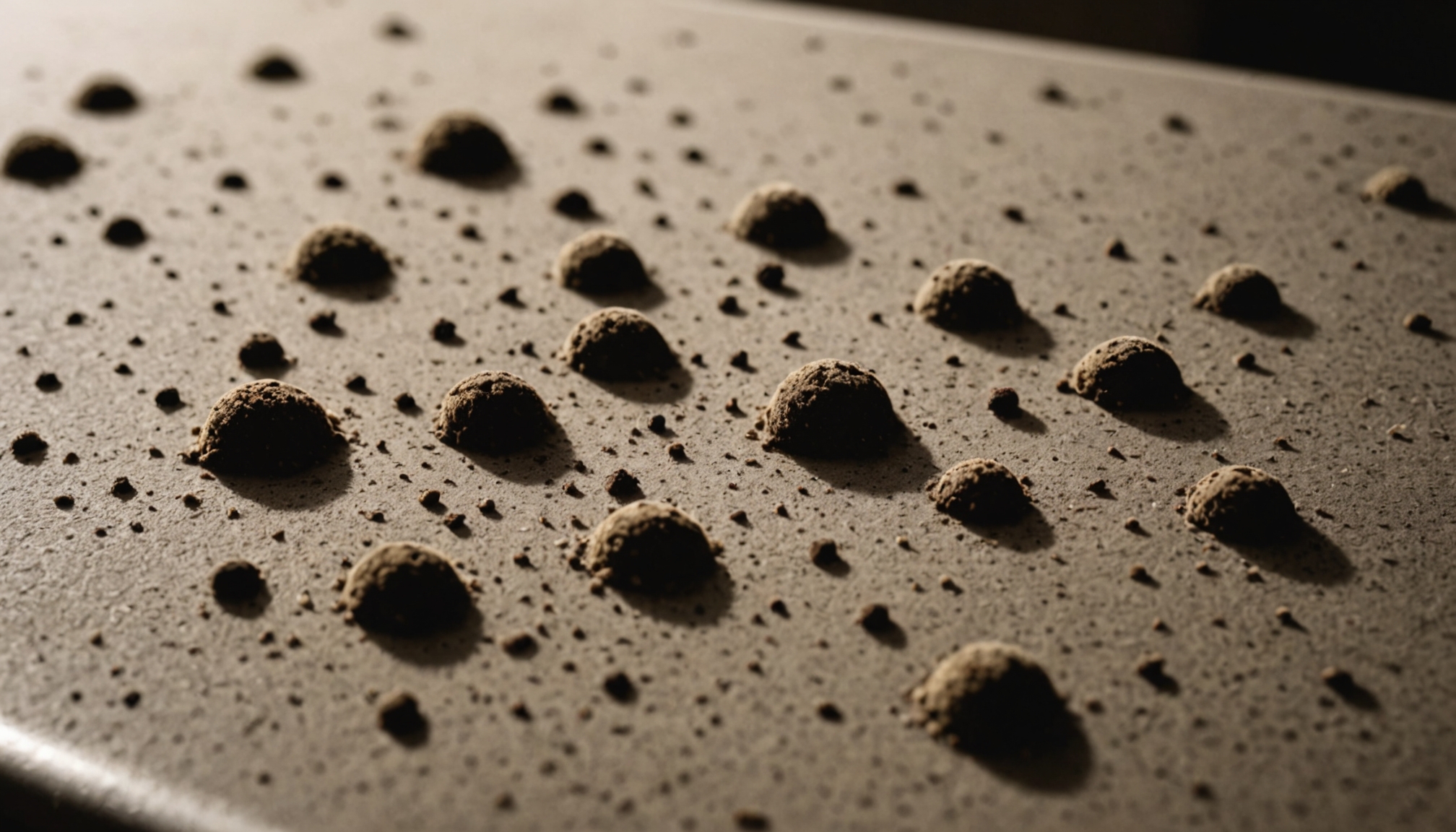
Pepper-like specks in shadowed corners are often the first warning sign of roaches. You’ll notice small black or dark brown dots that look like pepper or coffee grounds. German roaches leave tiny, dust-like specks, while American roaches drop larger, cylindrical pellets that may show ridges instead of smooth sides. Unlike mouse feces, roach droppings have rounded ends.
Check hidden spots: inside kitchen cabinets along baseboards, under and behind refrigerators and stoves, in wall cracks, under sinks, and in cluttered storage. You may see dark stains or smears and smell a faint musty, oily odor.
Sparse specks suggest a small, new problem; clusters point to a nearby colony; widespread droppings indicate a growing infestation. Consistent findings along pathways confirm activity and urgency. Early detection leads to easier and cheaper eradication, so take immediate action when you notice these signs.
Oval Egg Casings Near Water Sources

After spotting droppings, look for oval egg casings—oothecae—tucked near moisture. You’ll spot small, bean-shaped capsules, brown to black, with ridged sides. They range from a few millimeters to about one-third of an inch and feel firm and slightly bulbous, like a pea pod. Typical species pack 14–16 eggs; German cockroaches cram up to 48 in two rows. Each ootheca contains 10 to 50 individual eggs, depending on the species.
Check water-heavy zones first. In bathrooms, scan around faucets, toilets, and under sinks. In kitchens, look under sinks, inside cabinets, and behind warm, moist appliances like refrigerators. Inspect laundry areas near washers, damp storage, bottle collections, and spots with condensation, drips, or minor leaks—especially crevices near plumbing, baseboards, and wall voids.
Finding intact or empty cases signals active or recent activity and calls for immediate, targeted control.
Discarded Exoskeletons in Sheltered Areas
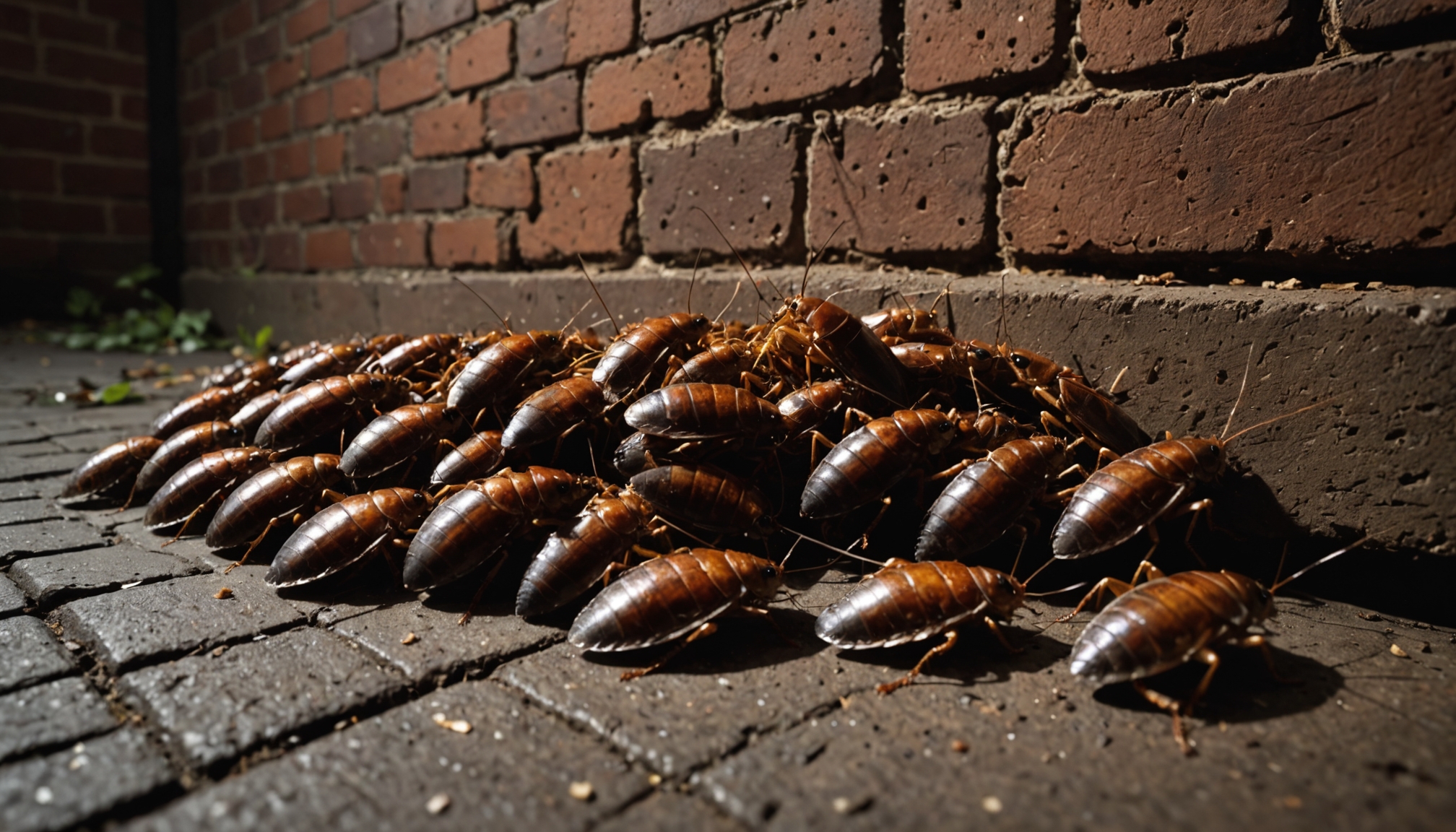
You’ll often find shed cockroach shells piled in sheltered spots because nymphs molt repeatedly as they grow. Check warm, humid hideouts like cracks, behind refrigerators and stoves, under sinks, inside cabinets, pantry shelves, and dark corners. These translucent, hollow skins signal active, growing populations and can warn you of hidden nests before you see live roaches. A musty odor around these areas can also indicate cockroach presence.
Why Shells Accumulate
Several simple behaviors explain why cockroach shells pile up in tucked-away spots. Nymphs molt repeatedly as they grow, leaving exuviae each time. Because they hide while soft and vulnerable, they shed in sheltered areas and don’t haul the papery skins away. Over weeks, repeated molts from multiple nymphs create layers of translucent, later darkening, shells. Cockroaches can compress their bodies to squeeze through tiny crevices, allowing them to reach sheltered molting sites where shells accumulate. You’ll often see several sizes at once, signaling a long-running infestation. These exuviae aren’t just harmless clutter; they fragment, add allergens to indoor dust, and can aggravate asthma. Their presence also flags recent activity, even if you don’t spot live roaches. Temperature and humidity speed development, so more molts—and more shells—accumulate faster. Regular cleaning, targeted monitoring, sealing gaps, improving ventilation, and calling professionals when necessary help curb buildup.
Common Hideout Spots
Think like a roach and focus on tight, dark, and undisturbed seams. You’ll find discarded exoskeletons where warmth, moisture, food traces, and low light intersect. Check baseboards, wall cracks, and the backs of kitchen cabinets and appliances. Scan bathroom pipe penetrations and drain surrounds for humid, sheltered pockets. Don’t overlook furniture seams, upholstery folds, ceilings, and high corners behind frames or curtains. Outdoors and connecting areas matter too: basements, crawl spaces, utility rooms, and storage niches collect shells. Mulch, leaf litter, drain lines, and gaps around vents or exterior walls often harbor molts. Seeing shells during the day can signal a larger infestation, since roaches are typically more active at night.
| Zone | Why shells linger | Quick check |
|---|---|---|
| Indoors | Tight cracks, porous wood/plaster, warm appliance backs | Run a card along seams |
| Connecting | Basements, utility rooms, low activity | Inspect pipe entries |
| Outdoors | Mulch, debris near foundation, vents | Lift edges, probe gaps |
What Shells Indicate
Those tight, dark seams you checked aren’t just hiding spots—they’re scoreboards. Those papery, translucent shells you find under sinks, inside cabinets, or beneath appliances mark every molt a nymph completed. Sizes vary: larger skins often point to American roaches, smaller ones to German roaches. Freshly molted roaches look pale or white until their new armor hardens.
Multiple shells in one sheltered spot signal active breeding and a growing hotspot. Count and compare sizes to estimate how many nymphs are present and how far along they are—German roaches shed 7–8 times, Americans 10–13. Expect droppings, egg cases, and a strong, musty odor nearby.
Handle with care. These brittle skins carry allergens and potential pathogens. Vacuum, wear a mask, and prioritize treatment in those areas.
Musty, Oily Odors That Linger
Even before you spot a roach, a musty, oily odor that lingers in warm, enclosed spaces can tip you off to an infestation. You’ll notice it first in cabinets, kitchens, bathrooms, basements, or laundry rooms—anywhere dark, moist, and food-adjacent. The scent skews musty, oily, and greasy, sometimes with an unpleasant sweet note, like musty basements, rancid oil, wet socks, old books, or even soy sauce in pantries.
That smell isn’t just “dirty air.” Cockroaches release aggregation pheromones and VOCs from gut bacteria, plus cuticular hydrocarbons, volatile acids, fatty acids, and proteins. Dead roaches add sharper oleic acid. Feces and waste compound it. The stronger and broader the odor, the larger the colony. If a persistent oily-musty smell appears despite cleaning, act quickly—odor often precedes sightings by weeks.
Nighttime Rustling and Scurrying Sounds
If that oily, musty odor raises suspicion, your ears can confirm it after dark. Cockroaches are nocturnal, so you’ll hear light scurrying, rustling, or faint scratching late evening through overnight, especially in kitchens, pantries, and near food storage. Hollow spaces—behind walls, under sinks, inside cabinets, and around appliances—amplify movement, making detection easier when ambient noise drops.
Listen for clicking or tapping as they contact hard surfaces, rare chirps during mating in dense populations, and occasional defensive hissing from certain species. Even egg cases can produce faint rustling as nymphs hatch. Isolated sounds suggest a small problem; frequent or escalating noises signal growth and broader spread. Pair nighttime listening with a flashlight check, address moisture, seal gaps, reduce clutter, and consider professional help if intensity rises.
Daytime Sightings of Roaches
Suddenly spotting a roach in broad daylight isn’t normal—it’s a warning. Roaches are nocturnal, driven by internal clocks that keep them hidden at night. When you see them in the day, something’s off. Overcrowded harborages, scarce food or water, or environmental stress can push them into the open despite higher predation risk. Chemical treatments or disturbances can also flush them out.
Daytime sightings often signal a heavy, advancing infestation with a large hidden population. You may also notice pepper-like droppings, egg casings in kitchens or bathrooms, a musty or oily odor, dead roaches, molted skins, or smear marks along baseboards.
Act quickly: clean up food residues, store items tightly, fix leaks, seal cracks and plumbing gaps, declutter, inspect dark areas, and call a professional if activity persists.
Unexplained Damage to Paper and Fabrics
Spot chewed book bindings or lifted wallpaper edges, and you may be seeing roach gnaw marks rather than normal wear. Check closets and drawers for frayed clothes and thinning linens, especially along seams and cuffs. If holes, torn edges, and tiny paper shreds keep appearing, assume active roaches and inspect nearby hiding spots.
Chewed Books and Wallpaper
A scalloped bite along a book’s spine or a peeling patch of wallpaper can signal cockroaches feeding on glue and paper. You’ll see irregular holes, ragged or chewed edges, and yellowed margins on pages and covers. Dark smear marks, droppings, and oily stains often flank the damage, distinguishing it from clean pet scratches or rodent gnaw marks. In books, bindings fail where roaches target adhesive; in wallpaper, they chew through backing and glue, leaving crumbling patches and unexplained holes near skirting boards, corners, and damp spots.
Check shelves near kitchens, basements, and bathrooms—warm, humid, cluttered zones amplify risk. Look for molted skins and staining alongside peeling seams. Their contamination can aggravate allergies and, with humidity, encourage mold on affected paper surfaces.
Frayed Clothes and Linens
Something as simple as unexplained fraying on a favorite cotton shirt or thin, threadbare patches on pillowcases can point to cockroaches feeding on stained fabric. They’re drawn to perspiration, food, and drink residues, especially on natural fibers like cotton, wool, and silk. As they graze, they don’t make clean cuts—fibers weaken, then small holes and thinning appear, often right where stains were.
You might notice pepper-like droppings near closets, faint musty odors, or smear marks and resilient stains that resist normal washing. Damage tends to worsen at night and on stored or less-frequently washed garments, especially in damp or food-exposed areas. Cockroaches may also contaminate clothes with pathogens and trigger allergies. Check for molted skins in laundry areas, and treat both the infestation and affected textiles promptly.
Allergy Flares and Respiratory Irritation
Even before you see a roach, your body may clue you in through allergy flares and breathing trouble. Cockroach proteins from bodies, saliva, feces, and shed parts cling to dust and fabrics—especially bedding—then become airborne when you clean, vacuum, or even walk. You might notice sneezing, congestion, itchy eyes, cough, postnasal drip, or skin itch. If you have asthma, exposure can trigger wheeze, chest tightness, and attacks, sometimes needing urgent care.
Urban families face higher exposure; sensitized children have greater hospitalization risk. Allergen levels in bedrooms strongly track with symptoms, so your sleep space often reveals the problem. Even homes without visible pests can test positive.
| Indicator | Why it matters |
|---|---|
| Night cough | Fabric-bound allergens in bedding |
| Morning congestion | Overnight inhalation |
| Wheeze after vacuuming | Dust particles aerosolized |
| Itchy, watery eyes | Airborne protein contact |
| Recurrent sinus/ear issues | Persistent airway inflammation |
Moisture Hotspots Attracting Activity
Those sudden allergy flares often trace back to where roaches thrive: damp, shadowed pockets you rarely inspect. You’ll find them where water lingers and ventilation fails. Leaky pipes under sinks, wet sponges, and unsealed garbage keep surfaces moist and food-scented. Standing water in tubs, sinks, and floor drains supplies drinking spots and humid hideouts; American cockroaches love drains. Cracks, pipe chases, and utility closets trap condensation, while basements, crawlspaces, and leaky attics stay humid enough for nesting. Dark clutter slows drying, letting colonies expand unnoticed.
Roach hot spots hide where water lingers and air stalls—damp, dark, cluttered corners fuel infestations.
- Fix drips and sweating lines; insulate pipes to cut condensation.
- Keep drains flowing; dry sinks and tubs nightly.
- Store sponges dry; seal trash and clean organics.
- Improve airflow in basements, crawlspaces, and closets.
Rapid Increase in Activity During Warm Periods
When heat settles in above 70°F (21°C), cockroaches ramp up fast—metabolism spikes, nights get busier, and eggs hatch sooner. You’ll notice more scurrying after dark, faster breeding, and bolder foraging as their need for food and water rises. Warm, humid air speeds their life cycle, swelling populations in weeks, not months.
Watch for sudden activity jumps after warm spells, monsoon rains, or shifts in barometric pressure—these can push roaches indoors. In hot regions, expect steady, year-round pressure instead of seasonal lulls. Summer peaks are typical; winter slows them outdoors, but they’ll crowd inside for shelter and moisture.
Cut the surge by tightening sanitation, sealing food, picking up pet dishes, fixing leaks, and eliminating standing water. If activity persists, deploy baits and call a pro.
Frequently Asked Questions
Can Roaches Be Brought in Through Delivered Packages or Secondhand Items?
Yes. Roaches can hitchhike in delivered packages and secondhand items. They hide in cardboard seams, egg cases, and padded folds, surviving on glue, food residue, and warmth during transit. You should inspect boxes immediately, open them outdoors or in a garage, and discard cardboard fast. Quarantine thrifted goods in sealed bags, then clean or heat-treat when safe. Don’t let packages sit. Monitor for droppings or shed skins, and keep sanitation tight to prevent establishment.
How Do I Safely Clean Roach Allergens Without Spreading Them?
Use a HEPA-filter vacuum to capture allergens, then immediately seal and discard the bag or empty the canister outdoors. Vacuum cracks, crevices, floors, and upholstery. Dust and wipe with a damp cloth or mop—don’t dry sweep. Wear a mask and gloves. Clean behind appliances, under sinks, and inside cabinets with moist methods. Reduce moisture, fix leaks, and ventilate. Declutter reservoirs. Prefer baits and traps over sprays. Consider professional help for heavy infestations.
Are Pet Food and Litter Boxes Major Attractants for Roaches?
Yes—accessible pet food and poorly maintained litter boxes strongly attract roaches. You’re offering protein-rich scents roaches detect with antennae, plus moisture and organic matter they need. Limit access: feed pets on a schedule, pick up bowls nightly, and store kibble in sealed containers. Wipe spills, vacuum crumbs, and rinse bowls. For litter, scoop daily, change regularly, keep it dry, and seal or cover boxes. Place monitors and seal gaps to reduce incursions.
What Professional Treatments Work When Sprays Stop Being Effective?
When sprays stop working, you switch to gel baits, IGRs, and IPM. Place gel bait in kitchens and bathrooms; it targets hidden roaches. Add insect growth regulators to break reproduction. Use dust insecticides in wall voids and behind outlets. Deploy cockroach vacuums for quick knockdown. Request species-specific plans and nighttime applications. Pros handle chemicals safely, seal entry points, reduce food/moisture, and set monitors. This combo restores long-term control with fewer pesticides.
Could the Smell Come From Dead Roaches Inside Walls or Appliances?
Yes. You could be smelling dead roaches decomposing inside walls, behind appliances, or in tight crevices. In poorly ventilated spaces, the sour, rancid odor concentrates and lingers, especially if multiple carcasses accumulate. It’s distinct from the oily-musty scent of live roaches, though both can overlap. Check damp, dark zones—under sinks, behind fridges, near pipes. Remove debris, vacuum with HEPA, improve ventilation, seal gaps, and consider professional inspection and cleanup.
Conclusion
Spotting these early signs gives you a head start. If you’re noticing droppings, musty odors, egg casings, or nighttime scurrying, you’re likely dealing with a growing infestation. Act fast: reduce moisture, seal cracks, declutter, and store food tightly. Clean regularly, vacuum crevices, and set traps or gel baits. If activity spikes—especially in warm weather—don’t wait. Call a professional for a thorough inspection and targeted treatment. Staying vigilant now saves you money, stress, and health risks later.


